 41/2 Sukhumvit Road, Khlong Tan Nuea, Watthana, Bangkok 10110
 094-792-9979
 Mon - Fri: 8.00 AM. - 4.00 PM.

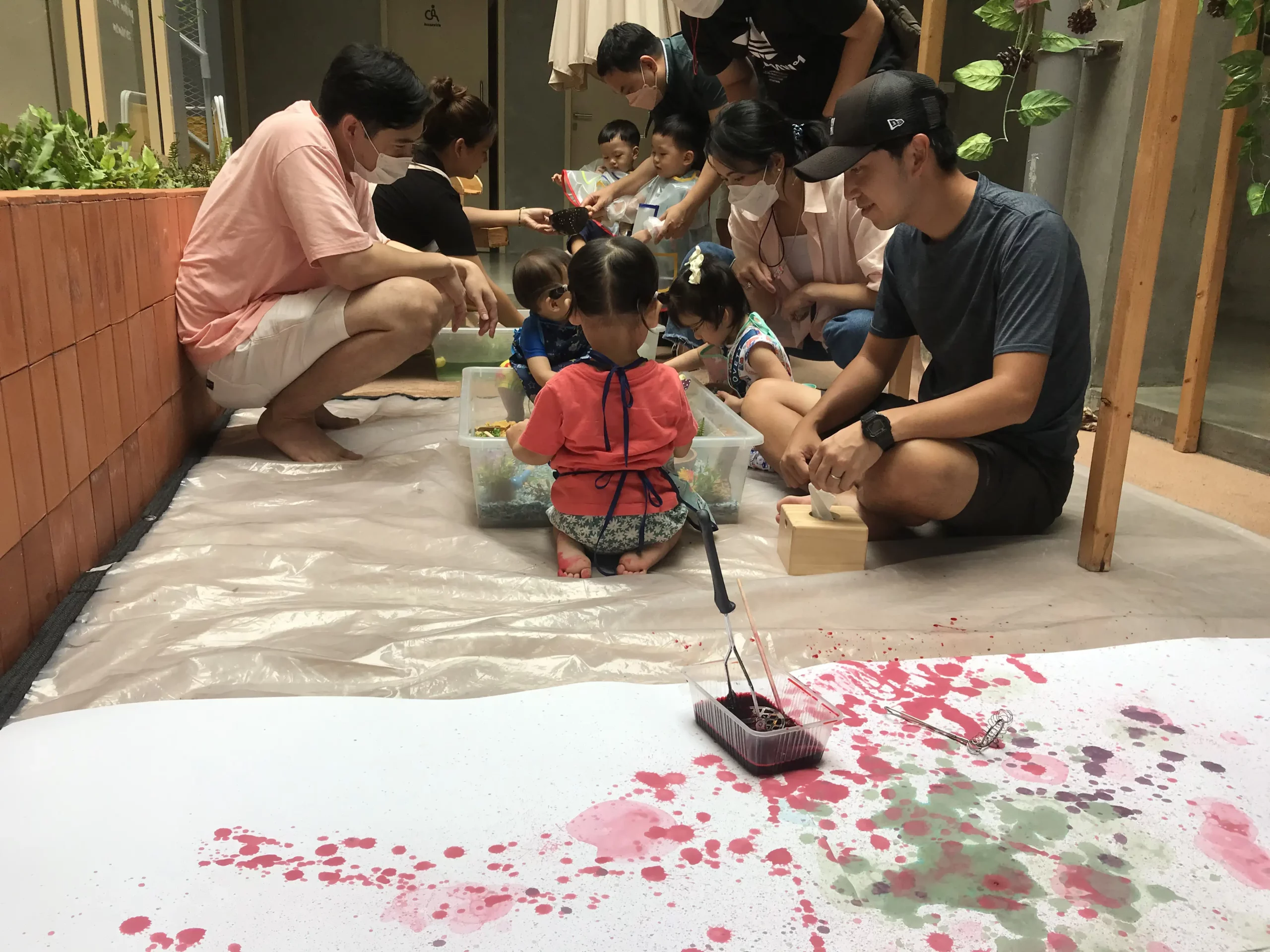
Creative play, meaning unstructured or loosely guided activity like building, pretend games, drawing, and music, builds problem solving, language, and emotional regulation in kindergarten age children faster than direct instruction alone, because it forces a child to generate ideas rather than just receive them. The American Academy of Pediatrics has said as much directly, warning that reduced play time in early childhood settings correlates with weaker executive function later on. Kindergarten programs that protect at least an hour of daily creative play alongside structured lessons tend to show stronger outcomes on both fronts, not a trade off between the two.
A five year old stacking blocks into a lopsided tower is doing more academic work than the tower suggests. She’s testing balance, negotiating with the friend who wants to add the next piece, and deciding what to do when the whole thing topples. Little Treehouse Nursery in Bangkok builds its kindergarten day around this kind of open ended play precisely because the learning inside it doesn’t show up if you only look for worksheets.
What Is Creative Play and Why Does It Matter in Kindergarten Childhood and Why Do They Matter
Creative play covers any activity where a child sets their own goal and figures out the method, rather than following a set of steps someone else designed. Building with blocks, inventing a pretend restaurant, drawing without a template, or making up a song all count, and none of them look like conventional academic work from the outside. Harvard’s Center on the Developing Child has published research tying this kind of play directly to the growth of executive function, the set of skills that lets a child plan, switch tasks, and hold information in mind, which matters more for later school success than early letter recognition does.
How Does Creative Play Build Skills That Formal Lessons Cannot
Formal lessons are good at transferring known information. Creative play is good at building the muscle for handling situations that don’t have a predetermined answer, which is a different skill entirely and one that shows up constantly outside a classroom.
- Problem solving grows when a child has to figure out why a tower keeps falling rather than being told the answer
- Language expands during pretend play because a child has to narrate roles, negotiate rules, and explain intentions to playmates in real time
- Emotional regulation gets practiced when a game doesn’t go a child’s way and they have to manage frustration without an adult stepping in immediately
- Fine motor control develops through drawing, cutting, and building in ways that are harder to replicate in a seated lesson
- Confidence builds because a child owns the outcome of open ended play in a way they don’t own a worksheet answer
None of these skills show up on a spelling test, but every kindergarten teacher can name the child who has them and the one who doesn’t.
Does Creative Play Prepare Children for Formal Kindergarten Academics
Yes, and the research on this is fairly settled at this point. A 2022 study published in the journal Frontiers in Psychology found that children with higher levels of pretend and constructive play in early years showed stronger later reading and maths outcomes than peers with more seated instruction time at the same age. The mechanism seems to be attention and self regulation rather than any direct academic content in the play itself, since a child who can sit through fifteen minutes of self directed building has already practiced the sustained focus a phonics lesson later demands.
What Does a Creative Play Session Look Like in a Bangkok International Kindergarten
Bangkok’s international kindergartens generally structure the day around EYFS or similar frameworks, but the creative play blocks inside that structure look fairly consistent across schools. A typical session gives children a set amount of time with minimal adult direction across a few stations.
- An open block or construction area where children design and build without a set outcome
- A dramatic play corner set up as a shop, kitchen, or clinic that rotates theme every few weeks
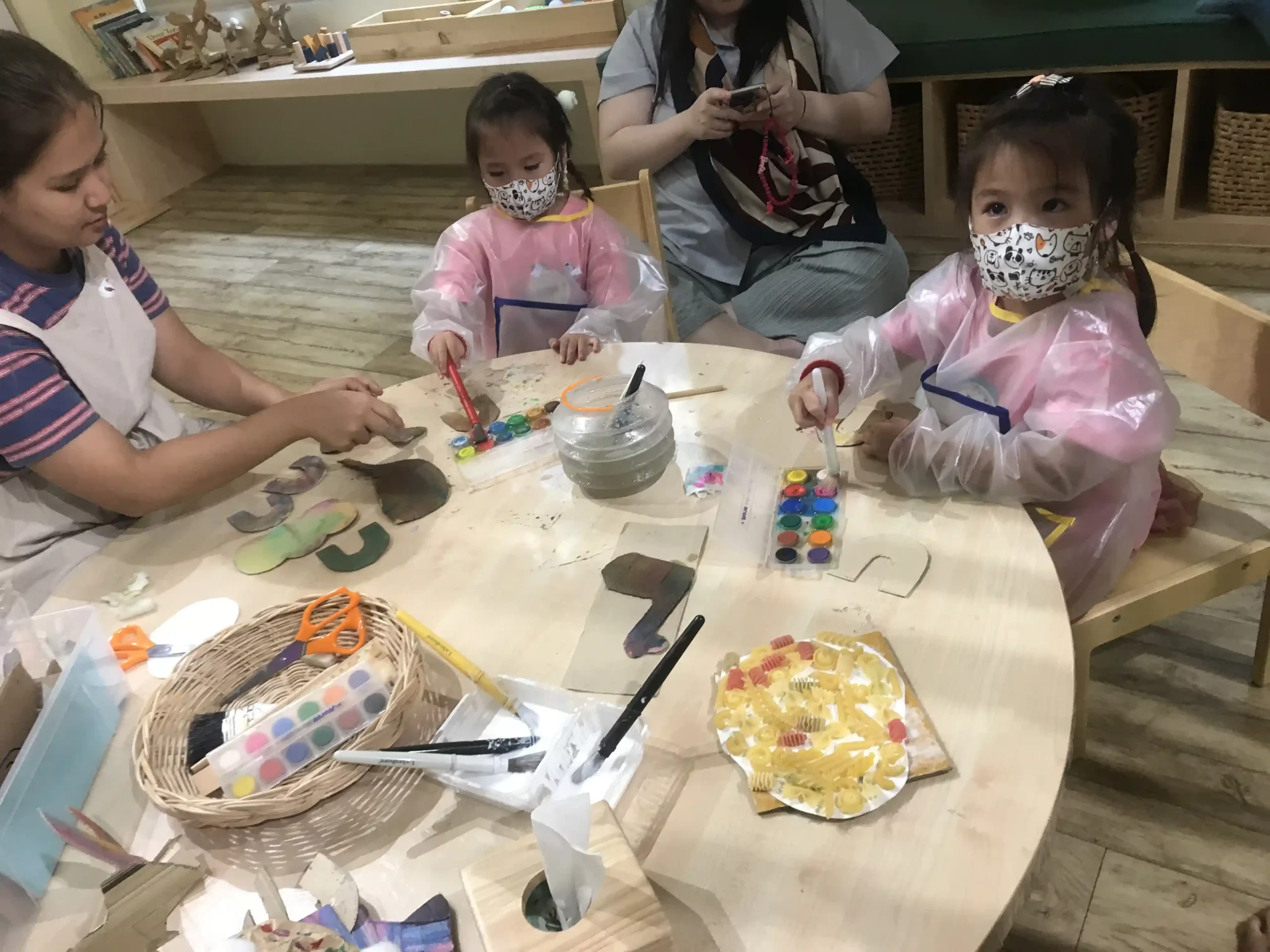
- A drawing and art table stocked with materials but no template to copy
- Outdoor time treated as play rather than exercise, letting children invent games rather than follow drills
- Music and movement sessions where children make up actions rather than only copying a teacher’s
Schools that treat these stations as filler between academic blocks tend to shortchange the actual value creative play offers.
How Much Creative Play Time Should a Kindergarten Day Include
There’s no single mandated number, but early years researchers generally point to at least an hour of largely unstructured play across a kindergarten day as a reasonable floor, split across a few blocks rather than one long stretch. The UK’s EYFS framework, which many Bangkok international schools build their curriculum on, leaves specific time allocation to individual schools but requires that a balance of adult led and child initiated activity run through every day, not just the early years room. A school that can’t describe how much of its day is genuinely child directed, as opposed to structured activity dressed up as play, is worth questioning on a tour.
What Do Parents and Reviews Say About Play Based Kindergartens in Bangkok
Bangkok parents researching kindergarten options tend to weigh independent write ups against the school’s own marketing rather than take either at face value. Local directories such as thebestinbangkok.com and regional platforms like thebestin.world track school and service roundups that come up often in these searches, and a good share of the word of mouth shaping parent decisions in Bangkok now runs through parenting content creators connected via platforms like getmyinfluencer.com rather than through school brochures. Get in touch with Little Treehouse Nursery today and see how a creative play focused kindergarten day is structured firsthand.
Why Choose Little Treehouse Nursery?
Little Treehouse Nursery runs a kindergarten day where creative play sits alongside the EYFS framework rather than getting squeezed out by it. Class sizes stay small enough that teachers can actually observe which child needs more block time and which needs more structured literacy, instead of running one fixed schedule for every student. The Thonglor location gives children daily outdoor access, which matters in a city where garden space at a preschool is the exception rather than the norm.
Conclusion
A kindergarten day built entirely around worksheets produces children who can follow instructions well. A kindergarten day built entirely around free play produces children who struggle with structure later. Neither extreme serves a five year old as well as a day that runs both side by side, with enough protected time in each that neither one gets treated as filler for the other.
Bangkok parents touring international kindergartens should ask less about the curriculum name on the brochure and more about how the school actually splits its hours. Reach out to Little Treehouse Nursery now and ask to see a real daily schedule, not just a philosophy statement!
Leave a reply