 41/2 Sukhumvit Road, Khlong Tan Nuea, Watthana, Bangkok 10110
 094-792-9979
 Mon - Fri: 8.00 AM. - 4.00 PM.

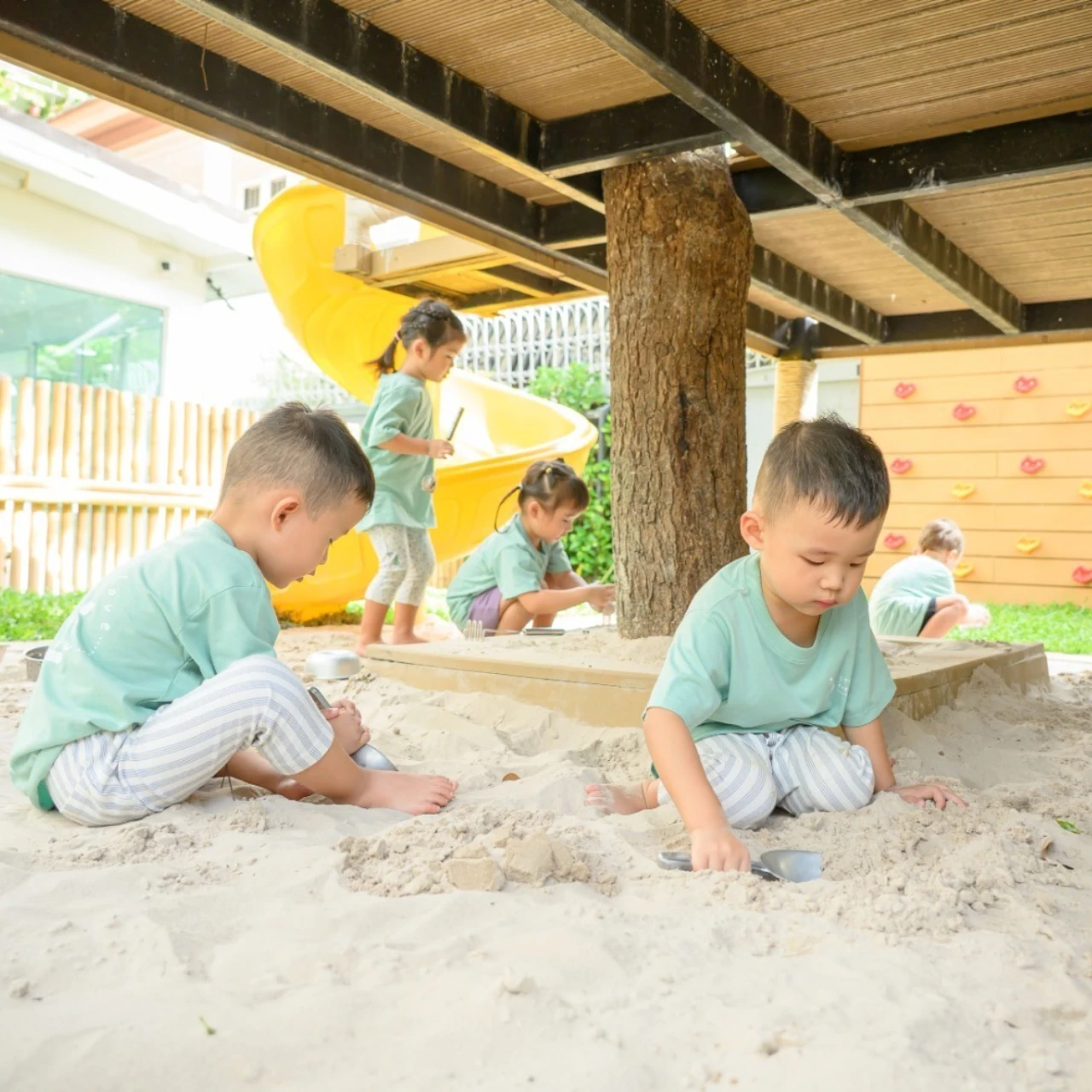
Outdoor learning gives young children what a classroom can’t: big movement, real risk judgment, sensory language, and daylight for developing eyes. The WHO recommends at least 180 minutes of physical activity a day for children aged 3 to 4, and a three year trial in Guangzhou found that 40 extra minutes outdoors each school day cut new myopia cases from 39.5% to 30.4%. In Bangkok, the best outdoor windows are early mornings and the June to November wet season, when PM2.5 levels around schools drop to their lowest.
Anyone who has watched a three year old spend a whole morning pouring water between buckets knows the look. Nobody told them to study volume, and they are studying it anyway. Little Treehouse Nursery in Thonglor, a British EYFS nursery and kindergarten for toddlers up to age six, builds its day around moments like this, with a sand pit, water play area, sensory garden, and a vegetable garden the children tend themselves.
Why Does Outdoor Learning Matter So Much in Early Childhood Education
Young children think with their bodies first, and outdoors is where they get room to do it. A 2020 University of South Australia systematic review found nature play consistently boosted physical activity and imaginative play, which is where early language and problem solving get practised. The researchers also flagged that the field still lacks a shared definition of nature play, so bold brochure claims deserve a second look.
Outdoor Kindergarten vs Indoor Classroom: Which Works Better for Preschoolers
A full outdoor kindergarten, where children spend almost the entire day outside, doesn’t survive a Bangkok April, and a purely indoor day wastes the years when children learn most through movement. The strongest setup teaches phonics and fine motor work indoors, then carries the same themes outside into counting seedlings or measuring water. The EYFS statutory framework that most international preschools follow requires outdoor access or planned outdoor activity every day unless the weather makes it unsafe.
How Much Outdoor Time Does a Preschooler Actually Need Every Day
Three benchmarks are worth knowing before any school tour.
- The WHO guidelines for under fives set a floor of 180 minutes of daily activity, with at least 60 minutes of energetic play
- The NHS names climbing, water play, and chasing games as the best ways for this age group to move
- Myopia research published in JAMA links daily outdoor daylight to fewer new cases, a real concern across East and Southeast Asia
A nursery day with an hour or more outside, split into two blocks, covers a solid share of that target.
How Do International Preschools in Bangkok Handle Heat and PM2.5 Season
In Bangkok, the real question is when children go outside, not whether they do.
- A 2026 study of Thai schools found PM2.5 peaks in March and April and falls from June to November, the cleanest window for outdoor activity
- The BMA advises cutting outdoor activity between 11am and 3pm on high heat days, which pushes garden time to early morning
- St Andrews International School Bangkok scales back outdoor play above AQI 100 and stops it at 200, while one Thonglor nursery moves children indoors above AQI 150 and publishes its readings on a public IQAir station
A preschool in Bangkok without a written air quality policy is telling parents something, and it isn’t reassuring.
What Should Parents Look for in the Outdoor Space at a Preschool in Bangkok
Size matters less than how often children actually use the space.
- Natural surfaces like sand, grass, mud, and water, since these drive the imaginative play the research keeps pointing to
- Climbing frames, balance logs, or a small slope, so both three and five year olds find a real challenge
- Growing spaces children work in, such as vegetable beds and compost, which turn outdoor time into science
- Proper shade, easy water access, and a clear rule for when children come back inside
Ask to see the garden at 9am on a school day, not during a quiet weekend open house.
What Do Parents and Independent Reviews Say About Green Nurseries in Bangkok
TheBestInBangkok’s 2026 nursery roundup ranks a Thonglor green nursery as the strongest overall pick for families wanting a small British curriculum setting, while noting its outdoor space is modest rather than sprawling. The same review praises the school’s public air quality monitor as a detail most nurseries at that price skip. Parents often compare reviews like this with regional directories such as TheBestIn.World, and more school word of mouth now travels through parenting creators connected via GetMyInfluencer.
Why Choose Little Treehouse Nursery?
Little Treehouse Nursery pairs the British EYFS framework with Reggio Emilia and Montessori methods, giving children aged up to six a day that moves naturally between classroom learning and a garden with a sand pit, water play, sensory garden, and vegetable beds. Its outdoor areas are fitted with air purifiers, and a clear policy brings children indoors when the AQI rises above 150, with readings shared on a public monitor so parents can check conditions themselves. Founded by two mothers with teaching backgrounds, the nursery sits between Thonglor, Ekkamai, and Phrom Phong and runs a free shuttle to both nearby BTS stations.
Conclusion
Outdoor learning isn’t a break from a preschool education; it’s the part of the day where children test what they learned indoors with their hands, feet, and eyes. In Bangkok, the schools that do it well are the ones that plan around heat and haze instead of giving up on the garden altogether.

Leave a reply