 41/2 Sukhumvit Road, Khlong Tan Nuea, Watthana, Bangkok 10110
 094-792-9979
 Mon - Fri: 8.00 AM. - 4.00 PM.
A child is usually ready for international preschool when three things line up: some independence with basic tasks, interest in other children rather than just playing alongside them, and the ability to separate from a caregiver without prolonged distress. Age matters less than most parents assume. Readiness for an international setting adds one more layer: comfort around a second language and a more structured routine than a playgroup at home offers.
Parents in Bangkok tend to ask the same question around the same age: is my child actually ready, or am I just tired of managing childcare at home. It’s a fair question with no single answer. Little Treehouse Nursery sees this hesitation often during tours, usually from parents whose child seems close but not quite there. The signs are worth separating from the guesswork.
What Are the Common Developmental Signs That a Toddler Is Ready for Preschool
Most of the readiness checklist has nothing to do with letters or numbers. The strongest signs are social and emotional, including natural curiosity, growing independence, and interest in other children. Social-emotional skill development is considered a particularly strong indicator of school readiness by pediatric development specialists. None of this needs to be perfect, and regression is normal.
How Do You Know If Your Child Is Ready for an International Preschool Specifically
An international setting adds a few extra variables beyond general daycare readiness. Language exposure is the obvious one, but daily rhythm matters just as much.
- Comfort hearing a second language spoken around them, even without speaking it back
- Ability to follow simple two step instructions from an adult who isn’t a parent
- Willingness to sit through a short group activity without needing constant attention
- Basic self help skills such as using a spoon or pointing to what they need
These skills get sharpened at preschool, not finished before it.
What Do Early Years Frameworks Say About Readiness
The British Early Years Foundation Stage framework, which many Bangkok preschools including Little Treehouse follow, treats readiness as a process rather than a checkpoint. The EYFS is built around three prime areas of development that come before four specific areas like literacy. It’s less an academic ladder and more a sequence of relationship and self regulation skills. Some child development theorists still argue the framework leans too academic for very young children.
Which Language and Social Skills Matter Most Before Starting
This is where bilingual households often worry their child is behind, usually without reason.
- Recognizing and responding to their name in more than one language
- Attempting to mimic new words even with rough pronunciation
- Showing curiosity rather than distress around unfamiliar language
- Basic turn taking in play, like passing a toy back and forth
Research on bilingual development has not supported a hard cutoff age for second language learning.
What Should Parents Look for When Touring International Preschools in Bangkok
Bangkok’s preschool market spans British, IB, American and bilingual programs, often a few BTS stops apart. A tour tells parents more than a website ever will.
- Staff to child ratio during actual play, not just the printed number
- How transitions between activities are handled, since meltdowns often happen there
- Outdoor or green space, which matters more in a dense city than expected
- Whether the school is BTS or MRT accessible for daily drop off
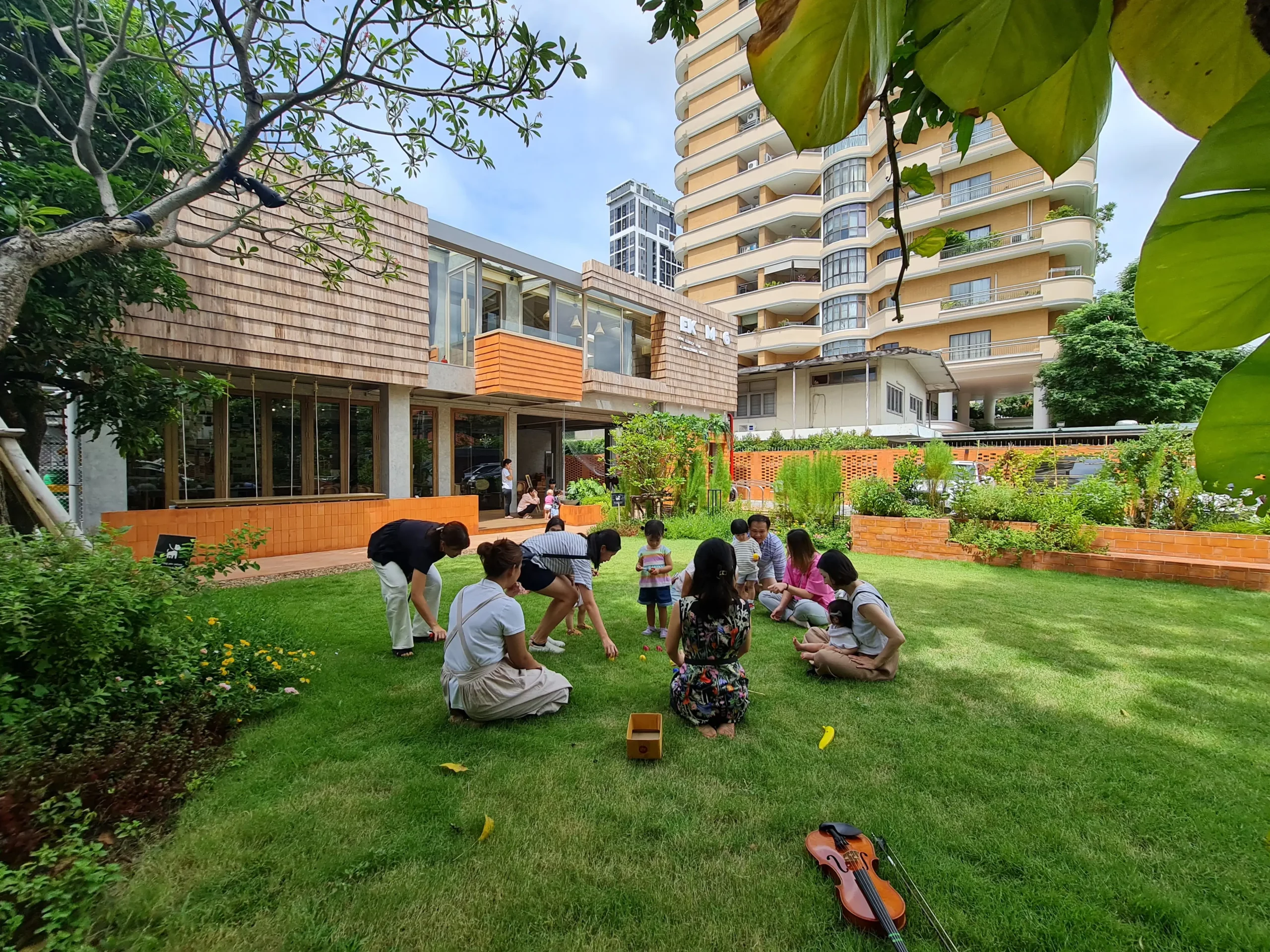
Little Treehouse Nursery, based in the Thonglor and Ekkamai area, runs its EYFS program around this kind of daily observation rather than a fixed entry test.
When Is the Right Age to Enroll a Child in an International Preschool
There’s no single correct age. Some Bangkok programs accept children from 18 months, others prefer closer to two and a half, depending on staff ratios more than any fixed rule. Preschool isn’t legally mandated in Bangkok, but early education is widely treated as a meaningful foundation ahead of primary school. A child clingy at 18 months might be genuinely ready a few months later without anything dramatic changing.
Why Choose Little Treehouse Nursery
Little Treehouse Nursery runs its early years program around the EYFS framework rather than a fixed curriculum pace, which means children move through prime and specific learning areas at a rate that matches their actual development, not a set timetable. The Thonglor location puts it within easy reach of the BTS for parents juggling drop off with a commute, and class sizes stay small enough that transitions between activities do not turn into daily chaos. It is not the only EYFS nursery in the city, and it will not suit every family’s schedule or budget, but for parents specifically weighing international preschool readiness against a British early years structure, it is one of the more straightforward options in the area.
Conclusion
Readiness rarely shows up as one clean signal. It is usually a handful of smaller things lining up around the same time, a bit more patience, a bit more curiosity about other kids, tolerance for a longer stretch away from a parent. Waiting for a perfect checklist moment tends to delay things longer than necessary, and starting a touch early with the right support often works out fine.
Parents in Thonglor and Ekkamai weighing this decision do not need to figure it out alone. Get in touch with Little Treehouse Nursery today and book a tour to see how the readiness signs play out in an actual classroom setting!
Leave a reply