 41/2 Sukhumvit Road, Khlong Tan Nuea, Watthana, Bangkok 10110
 094-792-9979
 Mon - Fri: 8.00 AM. - 4.00 PM.

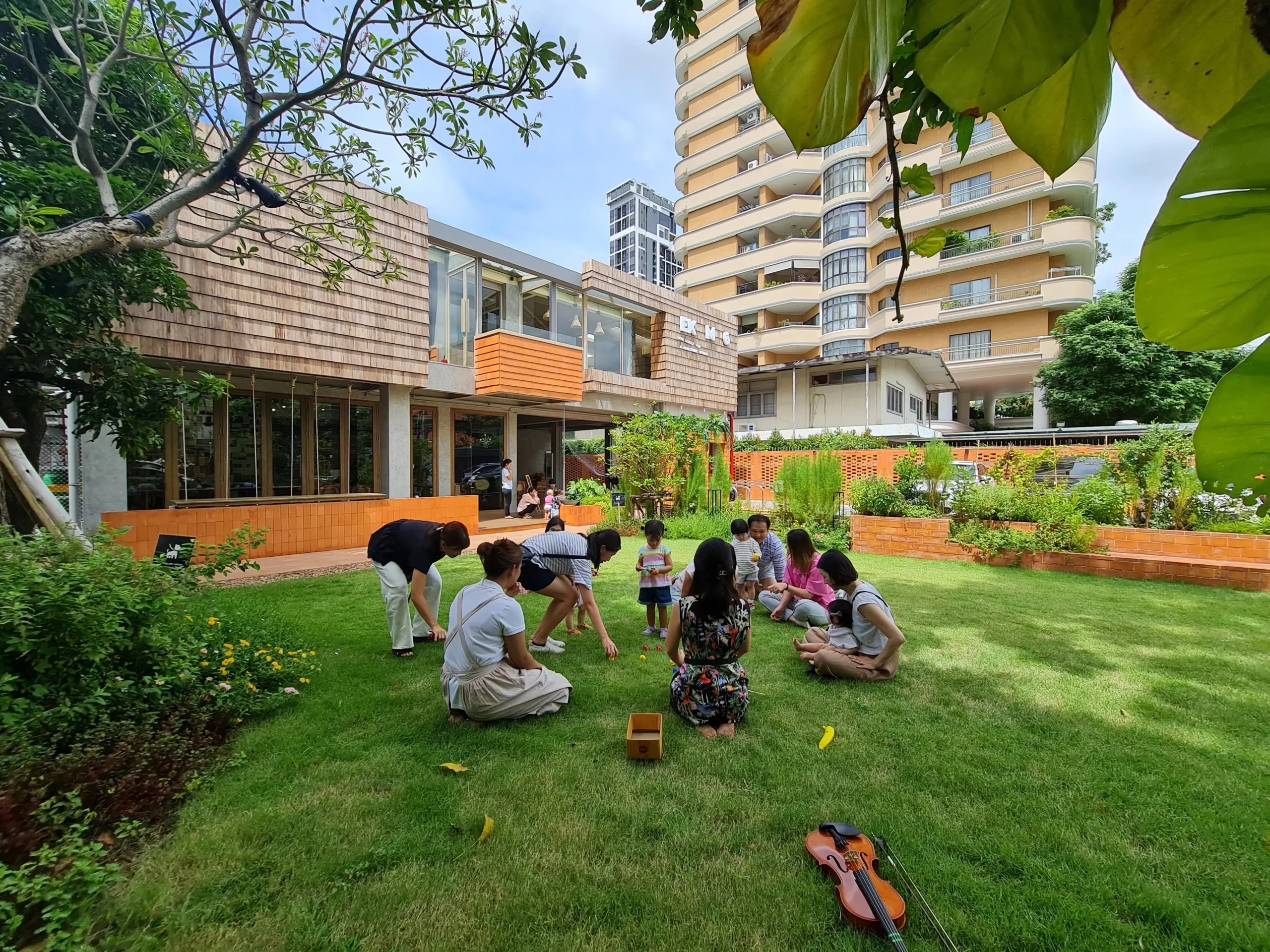
International preschool supports early development by matching activity type, group size, and teacher interaction to a child’s specific age band, since a two-year-old’s brain and a five-year-old’s brain process instruction differently. The strongest programs shift structured learning time upward gradually, from a few minutes of circle time for toddlers to 30-plus minute literacy blocks by kindergarten age. In Bangkok, this kind of staged, EYFS-anchored program typically costs between 200,000 and 600,000 THB a year depending on campus size and facilities.
Parents touring schools often assume “early years” is one program with a single daily format, then get surprised when a toddler room and a kindergarten room down the same hallway look nothing alike. That difference is the point, not an inconsistency. Little Treehouse Nursery in Bangkok runs its EYFS curriculum this way, adjusting classroom structure as children move through each age band rather than applying one format across the full early years span.
What Age Stages Does International Preschool Cover in Thailand
Thai international preschools generally follow the UK’s EYFS framework, which breaks early years into recognizable bands rather than one undifferentiated “preschool” period.
- Birth to 2 years: often labeled nursery or toddler stage, focused almost entirely on sensory input, attachment, and basic motor development
- 2 to 3 years: early exploratory stage, where short structured moments start appearing alongside free play
- 3 to 4 years: pre-kindergarten, where letter sounds, number recognition, and turn-taking games get formal attention
- 4 to 6 years: reception and kindergarten stage, where EYFS‘s seven learning areas (communication, physical development, personal and social skills, literacy, maths, understanding the world, expressive arts) get taught with real structure
A child moving through these stages at the same school benefits from continuity that a family switching schools every year or two simply doesn’t get.
How Curriculum Changes from Toddler to Kindergarten Stage
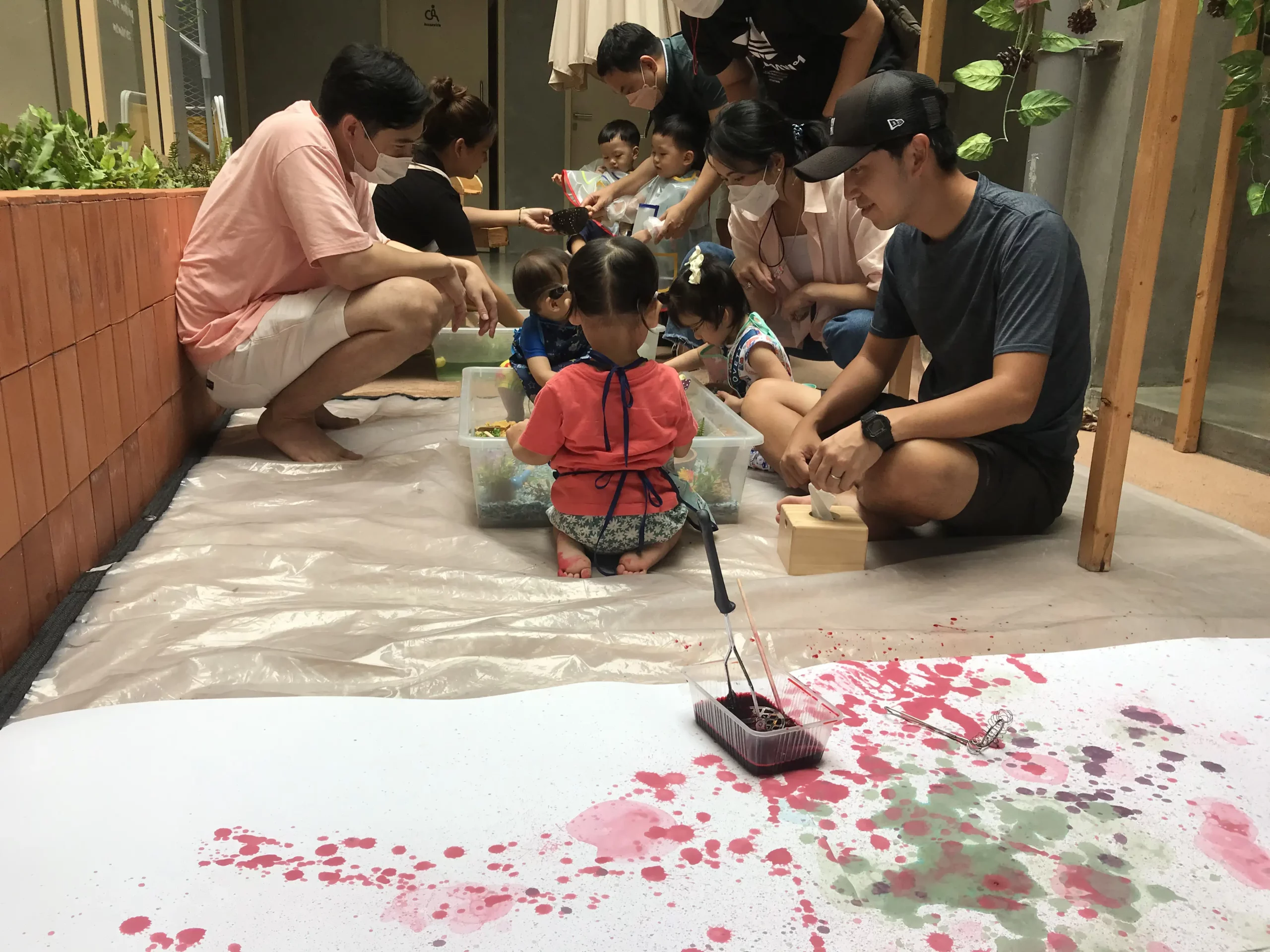
The shift isn’t just “more academics as kids get older.” Toddler classrooms run almost entirely on sensory stations, songs, and free movement because attention span at that age tops out at a few minutes and language is still being built through repetition rather than instruction. By age three, short circle-time blocks start appearing, usually 10 to 15 minutes, layered between sensory and art stations rather than replacing them. Kindergarten-age classrooms flip that ratio, holding structured literacy and numeracy for 30 minutes or more at a stretch while still keeping outdoor and art time in the daily rotation. The NAEYC’s position statement on developmentally appropriate practice backs this staged approach directly, arguing that instruction has to match how a child’s brain processes information at that specific age rather than following a fixed academic calendar.
What Developmental Milestones Should Parents Track by Age
Milestone tracking gets murky fast if parents rely on generic checklists that don’t specify what “on track” actually looks like at each age. A few concrete markers worth watching:
- By age 2: 50-plus word vocabulary, walking steadily, basic pretend play
- By age 3: short sentences, sharing with mild prompting, using a spoon and cup independently
- By age 4: following two-step instructions, recognizing some letters or numbers, cutting with child scissors along a line
- By age 5: full sentences with clear speech, counting to 20, writing some letters of their own name
Howard Gardner’s multiple intelligences framework is worth knowing here too, since a child lagging on one of these markers isn’t necessarily behind, they may just be showing strength in a different domain (spatial, musical, bodily-kinesthetic) that a narrow checklist doesn’t capture. Parents worried about a specific gap should raise it with the classroom teacher rather than comparing against a printed list alone.
How Bangkok International Preschools Support Each Stage Day to Day
Bangkok’s heat and humidity shape the daily schedule as much as the curriculum framework does. Outdoor and garden-based activity gets pushed into the 8:30 to 10:00am window before temperatures climb, which works well for toddler gross motor goals and kindergarten science observation alike. Midday shifts indoors for sensory work, art, and (for older groups) structured literacy or numeracy in small groups. A breakdown of one Thonglor nursery’s daily structure shows how this plays out across a real schedule rather than a theoretical one, and it’s a useful reference point for parents comparing schools during tours.
What Parents And Independent Reviews Say About Staged Development Support
Independent write-ups tend to focus on the same handful of things: class size, garden access, and how visibly different the toddler and kindergarten rooms actually are. Bangkok parents comparing schools tend to cross-check this kind of independent coverage against directories like thebestinbangkok.com, and increasingly against parenting content creators connected through platforms such as getmyinfluencer.com rather than relying on school brochures alone. For families researching options in other cities, thebestin.world tracks similar school and service roundups region by region.
Why Choose Little Treehouse Nursery
Little Treehouse Nursery runs a 60-student campus in Bangkok where roughly 80 percent of families are foreign nationals, which shapes a lot of the day-to-day in ways that matter for staged development specifically. Smaller total enrollment means age bands don’t get blended out of necessity the way they sometimes do at larger campuses running tight staffing ratios. The EYFS framework sits underneath everything, but garden access and small class sizes are what actually let a toddler room and a kindergarten room run genuinely different daily structures rather than a scaled-down version of the same plan. That distinction is easy to claim on a website and harder to verify on a tour, so it’s worth asking directly how toddler and kindergarten schedules differ before enrolling anywhere.
Conclusion
Matching a child’s classroom experience to their actual developmental stage, rather than a single fixed preschool format, is the difference between a program that supports growth and one that just occupies time. Toddlers need sensory input and short bursts of structure; kindergarteners need longer academic blocks alongside the same outdoor and art time that never really goes away. Bangkok’s climate and the EYFS framework both push schools toward this staged approach, but not every nursery executes it with the same rigor. Parents weighing options in Bangkok can book a tour at Little Treehouse Nursery to see how a toddler classroom and a kindergarten classroom actually differ on the same campus, on the same day!
Leave a reply