 41/2 Sukhumvit Road, Khlong Tan Nuea, Watthana, Bangkok 10110
 094-792-9979
 Mon - Fri: 8.00 AM. - 4.00 PM.
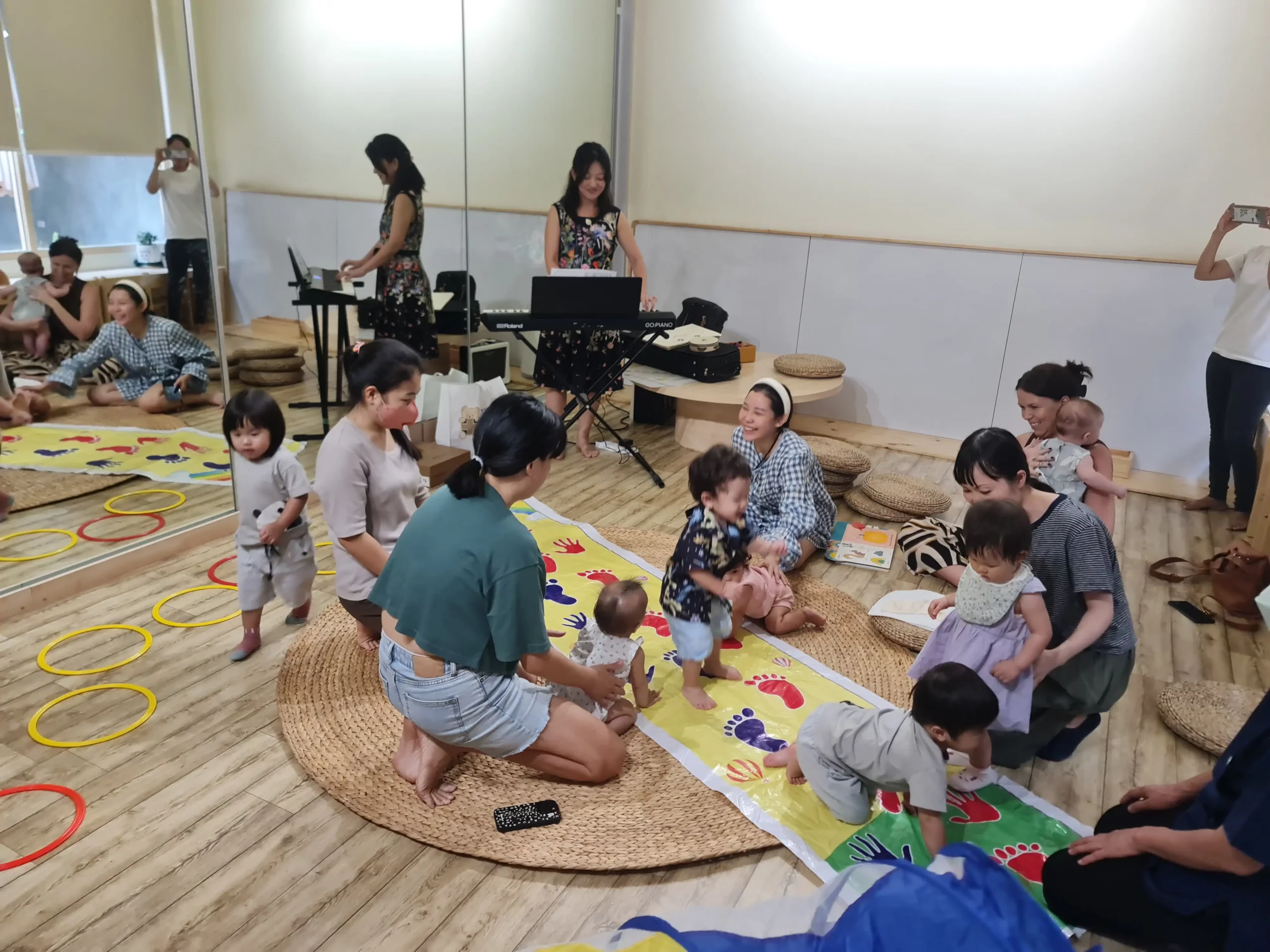
Nursery school builds communication skills through back and forth conversation, not the number of words a child hears, which is what a Harvard and MIT study of four to six year olds found. By age five, the EYFS framework used by most international preschools in Bangkok expects a child to hold a conversation and speak in full sentences. Children new to English often go quiet for three to six months first, and that’s normal.
Most parents notice the change at dinner. A two year old who used to point and grunt starts saying “no, MY turn,” and a few months later is explaining, at length and with great seriousness, why the dog is sad. Very little of that came from flashcards. It came from hours spent with people who talk back. Little Treehouse Nursery on Thonglor Soi 13 teaches 60 children aged 12 months to 6 years in English, and around 80 percent of its families are foreign nationals, so a lot of its classroom talk happens in a language some children are only just starting to learn.
How Does Nursery School Help Young Children Learn to Communicate?
It gives them far more chances to talk with someone, rather than be talked at. Researchers at MIT and Harvard recorded children at home and found that the number of conversational turns, not raw word count, explained most of the differences in language scores and brain response between children. A good nursery school stacks those turns across a whole morning, with teachers who notice a child pointing, name the thing, then wait for the reply, the pattern Harvard’s Center on the Developing Child calls serve and return.
What Communication Skills Should a Preschool Child Have by Age Five?
Communication and language is one of the three prime areas in the Early Years Foundation Stage, and its early learning goals describe what a child should manage by the end of reception. Stripped of jargon, the list is short:
- Listen closely during stories and group talk, then respond with a relevant question, comment, or action
- Ask questions to check they have understood, rather than nodding along
- Hold a back and forth conversation with a teacher or a classmate
- Explain why something might happen, using new words picked up from stories, rhymes, and non fiction books
- Talk about their own experiences in full sentences, with past, present, and future tenses and joining words like “because”
Nursery age children get there in small steps, and following a two part instruction like “get your coat and wait at the door” comes long before retelling a story in order.
What Are the Best Nursery School Activities for Building Speaking and Listening Skills?
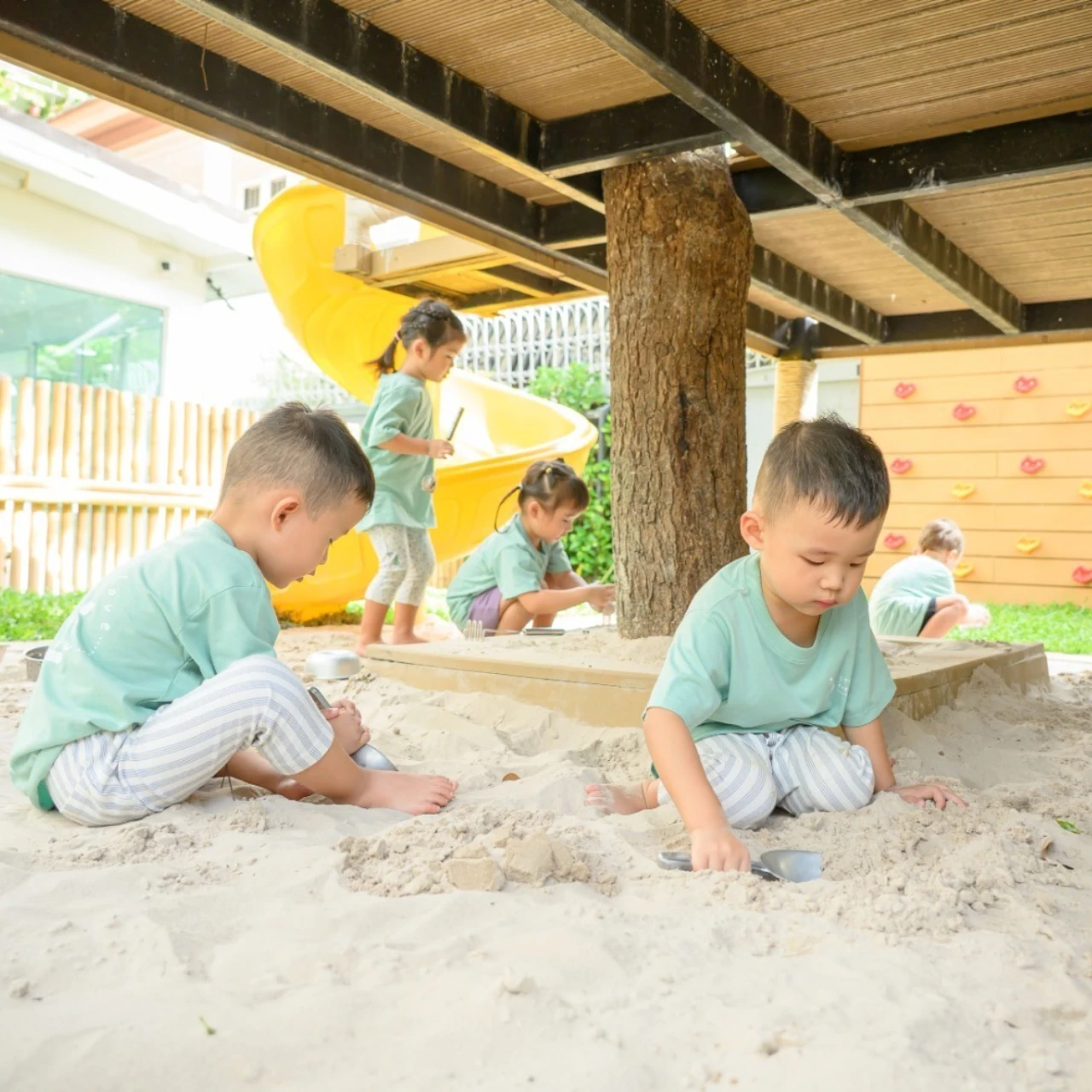
Some parts of a nursery day do far more for talk than others. The ones that work put a small group of children around something genuinely interesting to talk about.
- Circle time in small groups, where waiting for a turn to speak is as much the lesson as speaking
- Pretend play in a kitchen corner or toy shop, which early years guidance links to children using language to imagine and act out roles
- Theme weeks, where a topic such as the ocean runs through vocabulary, counting, art, and science at once, an approach Amarin Baby and Kids saw on a visit to a Thonglor nursery that even brought a real fire engine in for a lesson
- Open ended process art, where the useful part is the chat afterwards when a teacher asks a child to explain what they made
- Songs, rhymes, and shared books, which train listening and give children ready made phrases to borrow
Worksheets barely register next to any of these, because a child tracing a letter alone at a table is not in a conversation with anybody.
Is It Normal for a Bilingual Child to Stop Talking in a New Preschool?
Yes, and it rattles plenty of expat parents in the first term. Children meeting a new classroom language often go quiet for a while, usually three to six months and longer for younger children, according to a speech pathology textbook on bilingual assessment, though a Cambridge scoping review of 40 studies found these children are busy gesturing, pointing, and rehearsing words the whole time. Silence that drags well past that window, or that also shows up at home in the child’s first language, deserves a speech therapist’s opinion rather than more waiting.
How Common Are Speech and Language Delays Among Young Children in Thailand?
More common than most families assume, and the Thai figures have been moving in the wrong direction. Screen time keeps turning up in the research as part of the reason.
- Thailand’s Department of Health screened children under five in 2022 to 2023 and flagged 22.5 percent with suspected developmental delays, mostly in language
- The same data shows language delays rising every year from 2019 to 2023, with expressive language, actually saying words, lagging most
- A study of 425 children aged two to five in Southern Thailand found 40.9 percent with suspected language delay, and more than two hours of screen time a day raised the odds roughly 17 times
- An Australian study of 220 families in JAMA Pediatrics estimated that a three year old on the average 172 minutes of daily screen time misses up to 194 conversational turns a day
- In the United States, nearly 1 in 12 children aged 3 to 17 had a voice, speech, language, or swallowing disorder in the past year
Nursery school is no treatment for a real delay, but a room full of chatty three year olds is a hard place to spend the morning silent in front of a tablet.
What Do Parents Say About Choosing a Nursery School in Bangkok?
Bilingual Thai and English nurseries run roughly 60,000 to 120,000 THB a term according to Superagent’s guide for expat families, while English medium nurseries in Thonglor list 200,000 to 400,000 THB a year. Curated directories such as thebestinbangkok.com and the wider thebestin.world network speed up a shortlist, while a lot of real classroom footage now reaches parents through family creators found on getmyinfluencer.com.
Why Enroll at Little Treehouse Nursery
Little Treehouse Nursery was founded by two mothers who were teachers themselves, and it pairs the British EYFS curriculum with Reggio Emilia and Montessori inspired teaching, with children helping to set their own classroom rules. English is the language of instruction, with Thai, French, Japanese, and Spanish offered as extra languages. Classmates come from Thailand, China, Japan, Australia, Britain, Canada, the Netherlands, Germany, and Portugal, so children learn early to make themselves understood to friends who did not grow up speaking the way they do.
Conclusion
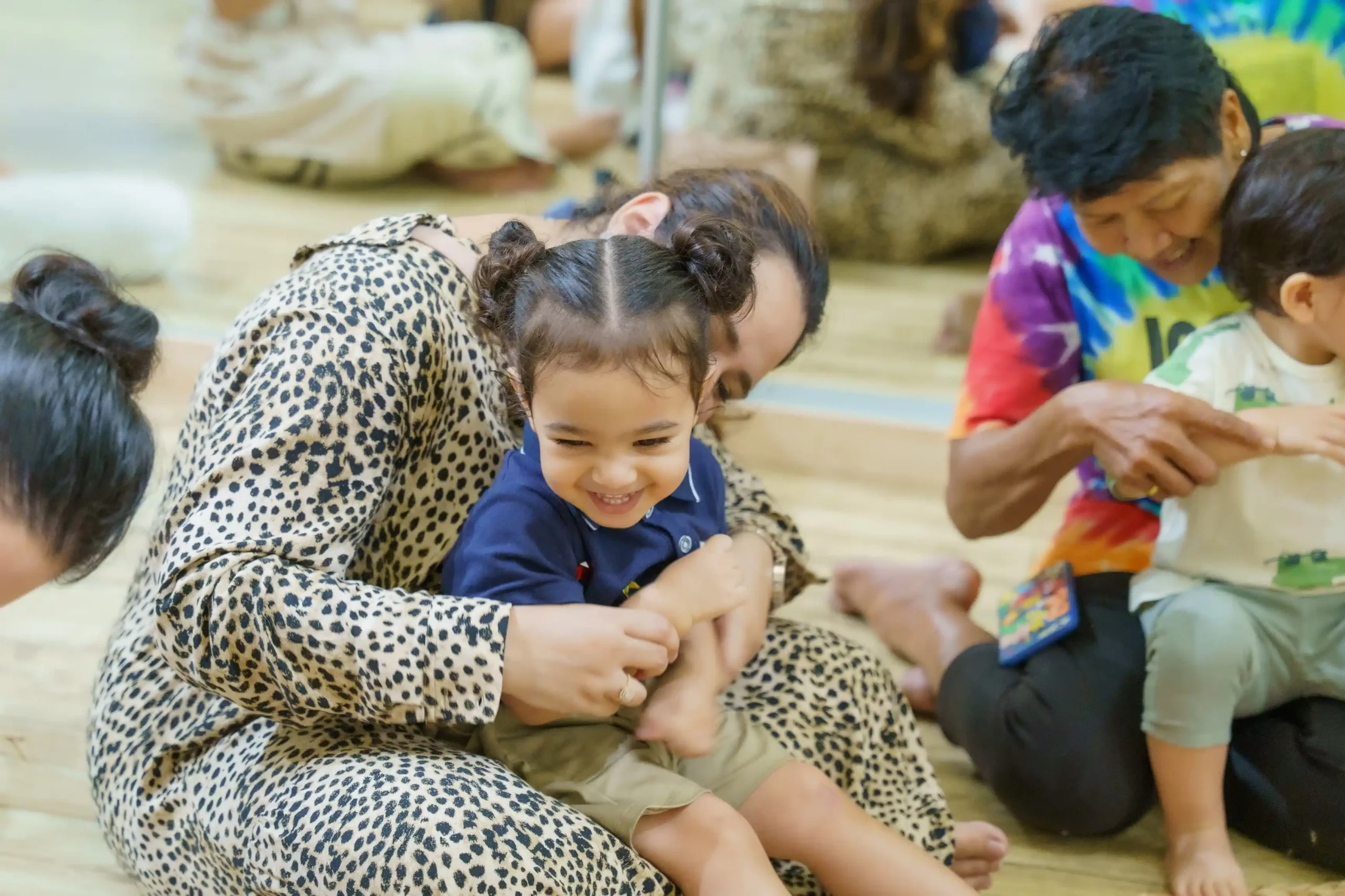
Communication grows from conversation, and a nursery school that gives a child dozens of real exchanges every morning does more for speech than any app or worksheet. A quiet first term is usually part of the process, not a warning sign.
Leave a reply