 41/2 Sukhumvit Road, Khlong Tan Nuea, Watthana, Bangkok 10110
 094-792-9979
 Mon - Fri: 8.00 AM. - 4.00 PM.
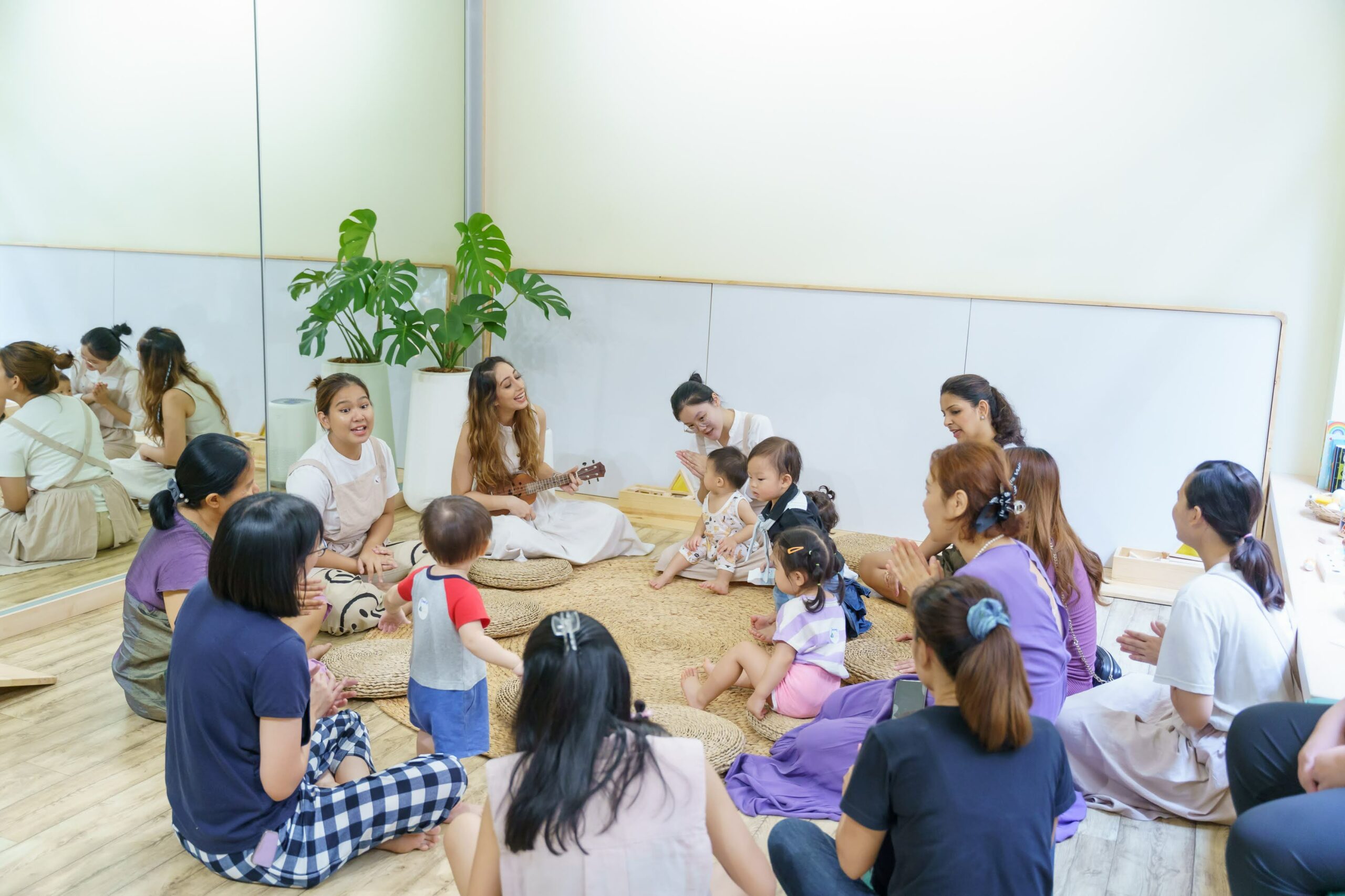
Small class sizes in an international preschool give children more one-on-one time with teachers, which research links to stronger literacy gains and fewer behavior issues in the early years. The British EYFS framework sets strict ratios by age, from one adult per three children under two to one per thirteen from age three with a qualified teacher present, and most quality-focused nurseries stay well under the legal maximum. A learning centre with fewer children per class also means teachers actually notice when a child is struggling, not just when a report card says so. That noticing, more than any fancy equipment, tends to be what separates a good early year from a wasted one.
Little Treehouse Nursery in Bangkok is one of a handful of Thonglor-area schools built around this idea, keeping groups small enough that teachers can track individual progress rather than manage a crowd.
What Counts as A Small Class Size in Early Years Education
There is no single magic number, but research gives a useful marker. Only child-to-teacher ratios of 7.5 to 1 or lower, or class sizes of 15 children or fewer, were linked to measurable benefits for children, according to a review of nearly six decades of early-childhood studies published in Educational Evaluation and Policy Analysis. Below that threshold the gains were real but modest. Above it, the data gets murky fast, and a class of 20 versus 25 barely moves the needle on outcomes.
Why Do Smaller Classes Improve Learning for Toddlers and Preschoolers
- A study using 21 teachers and 354 children found that children in reduced-size classrooms took part in more one-to-one interactions with teachers than children in regular classrooms, and those in smaller classes gained more in literacy skills by the end of preschool.
- A class size reduction of five students in preschool has positive effects on children’s literacy achievement, based on data collected across a full school year.
- Smaller groups give children the opportunity to form meaningful relationships with adults and peers, and low child-to-staff ratios allow teachers to notice each child and share more responsive, warm interactions.
None of this means a 12-child class magically produces a genius by age five. The effect sizes in most of these studies are real but small, closer to a nudge than a leap. What it does mean is that a teacher managing eight children can catch a shy kid who hasn’t spoken all week. A teacher managing twenty-five usually can’t, not because she doesn’t care, but because there are only so many hours in a school day.
How Do International Preschool Ratios Compare Across Countries
- In England, the EYFS statutory framework requires one qualified staff member per three children under two, one per five for two-year-olds, and either 1:13 or 1:8 for children aged three and over depending on whether a Level 6 qualified practitioner is present.
- The ratio for two-year-olds in England is 1:4 in older guidance, compared with 1:6 in Ireland and Germany, 1:8 in France, and one staff member per eight children aged three to five in Norway.
- A Bangkok school that follows EYFS standards is, by definition, holding itself to one of the stricter ratio systems in the world, not a locally invented one.
Thailand does not enforce a single national ratio for private international nurseries the way England does through statute, which means the number often comes down to what a given school chooses to commit to, not what it’s forced into.
What Should Parents Ask When Comparing a Learning Centre in Bangkok
Bangkok has no shortage of options, from long-running names like Storytime Preschool near Nana to newer Montessori-style setups such as Casa Bambino, which designs its Montessori Nursery programme for children aged eighteen months to three years. What’s harder to see from a school’s website is the actual headcount inside a classroom on a Tuesday morning. One Bangkok-focused parenting guide put it plainly: choosing a school with small class sizes and a better student-to-teacher ratio matters more than olympic-length pools or the finest libraries in the world. Ask for the current enrolment per class, not the maximum capacity listed in a brochure, since the two numbers are rarely the same.
Does A Smaller Class Size Justify a Higher Preschool Fee in Bangkok
This is the trade-off nobody likes to say out loud. Smaller classes cost more to run because you’re paying the same rent and same number of teacher salaries to serve fewer families. Programs studied in one major meta-analysis kept ratios at 10:1 or smaller and class sizes under 20 in nearly every case, which the researchers noted is already close to what current reasonable practice recommends for three- and four-year-olds, so paying extra for a class of eight instead of eighteen may buy less improvement than the price tag suggests. Where it clearly pays off is with very young children, or kids who need more individual support settling in. For an average, securely attached three-year-old, the difference between a class of ten and a class of fifteen is probably smaller than a parent touring the school would guess.
Why Little Treehouse Nursery
Little Treehouse Nursery keeps its class groups small across Nursery, Pre-Kindergarten, Kindergarten 1 and Kindergarten 2, which means teachers can track each child’s progress instead of managing a crowd. The school blends the British EYFS framework with Reggio Emilia and Montessori elements, and its Thonglor location includes a free shuttle to BTS Thonglor and Phromphong for families commuting across the city. Parents touring the school are welcome to ask for the actual number of children enrolled per class this term, not just the room’s rated capacity.
Conclusion
Class size is one of the few things about a preschool a parent can actually verify before enrolling. Curriculum branding and shiny facilities matter less than whether a teacher has the bandwidth to notice a quiet child on a bad day, and the research backs that up more consistently than most education claims do.

Leave a reply